Bank Account Garnishment. Garnishment occurs after a legal judgment. Bank account garnishment, also known as a bank levy, is a technique which is used to recover money from people with substantial outstanding debts. Bank account garnishment is a third option. A bank account levy (also referred to as bank account garnishment,) occurs when a creditor is able to take all, or a portion of, the money in a debtor's bank account for payment of an overdue debt. So there has to be an existing judgment before a garnishment can come into play. There are two different forms of garnishment: Under some circumstances the debtor does not have to. A bank account garnishment, also known as a bank levy, is a legal step creditors can take to collect what you owe, by way of a court judgment. Bank accounts and collections bank staff frequently are confronted by garnishments and attachments of customer accounts when the party seeking the garnishment has not completely or. Bank account garnishment means that a debt collector has successfully sued to have money taken your bank isn't required to notify you of an account garnishment unless the withdrawal overdraws. A bank account garnishment is one of the ways that a judgment creditor can collect on a judgment. Nonwage garnishment is a procedure in which a judgment holder attempts to garnish funds in a. To open a bank account that no creditor can touch, you must bank in a state whose laws prohibit garnishment against banking institutions. Technically, taking money from your financial accounts is called a levy and again it's only an option after creditors successfully bring legal action against you. You can only close a bank account with a garnishment.
Bank Account Garnishment - Credit Union And Bank Accounts.
What Is A Bank Account Garnishment With Pictures. A bank account garnishment is one of the ways that a judgment creditor can collect on a judgment. Bank account garnishment means that a debt collector has successfully sued to have money taken your bank isn't required to notify you of an account garnishment unless the withdrawal overdraws. To open a bank account that no creditor can touch, you must bank in a state whose laws prohibit garnishment against banking institutions. Nonwage garnishment is a procedure in which a judgment holder attempts to garnish funds in a. You can only close a bank account with a garnishment. Under some circumstances the debtor does not have to. Bank account garnishment is a third option. A bank account garnishment, also known as a bank levy, is a legal step creditors can take to collect what you owe, by way of a court judgment. Garnishment occurs after a legal judgment. So there has to be an existing judgment before a garnishment can come into play. Bank account garnishment, also known as a bank levy, is a technique which is used to recover money from people with substantial outstanding debts. Technically, taking money from your financial accounts is called a levy and again it's only an option after creditors successfully bring legal action against you. A bank account levy (also referred to as bank account garnishment,) occurs when a creditor is able to take all, or a portion of, the money in a debtor's bank account for payment of an overdue debt. Bank accounts and collections bank staff frequently are confronted by garnishments and attachments of customer accounts when the party seeking the garnishment has not completely or. There are two different forms of garnishment:
If that happens, a certain amount of the total debt is withheld from your wages.
What is required on a garnishment for identification of the defendant? Is this legal, and does the bank have the right to garnish your bank account? Bank accounts and collections bank staff frequently are confronted by garnishments and attachments of customer accounts when the party seeking the garnishment has not completely or. I was told that any the bank is required to send you notice of the garnishment order and instructions for completing the. Can my joint bank account be garnished for the full amount of the deposit even though it is the sole support for a family of four? Garnishment is a legal process by which a person to whom you owe money and who has started a lawsuit against you seeks to obtain money from your bank account or paycheck. Certain debts owed to the government may also result in garnishment, even without a judgment. Bank garnishments are a serious topic we must talk about when we consider the area of wage garnishment. If you owe a debt and you don't pay it when it is due, your wages may be garnished. State law varies on whether a bank can garnish a joint account and in what manner. Can your wages be garnished? Garnishment for identification of the defendant. How will i be notified of the garnishment? They mailed a levy notice to our bank yesterday. Is there anything that i can do to protect my money. Midland funding won a judgment against my husband for an old credit card debt. What is required on a garnishment for identification of the defendant? Bank account garnishment or levy. Once your bank, the bailey building and loan, receives the garnishment order, it has two business days to conduct a review and identify your accounts. Bank account garnishment, also known as a bank levy, is a technique which is used to recover money from people with substantial outstanding debts. Llcs are subject to the same pursuit and attachment of assets by its in order for a bank to comply with a garnishment demand by the irs or other creditor, the account. Garnishment occurs after a legal judgment. How to open a bank account savings accounts 101 checking accounts 101 cds 101 overdraft fees 101. If you've found out that a judgment creditor is trying to drain your bank account—known as a bank levy or garnishment—you'll need to move fast to preserve your funds. Credit management services inc did a wage garnishment totaling 512.74 for two past medial bills last month. A garnishment does not occur until a creditor has proved that the debtor legally owes him the sum he seeks. If the order is to collect federal taxes or child. Under some circumstances the debtor does not have to. Bank account garnishment is a third option. Can your bank account be garnished? You can only close a bank account with a garnishment.
How To Survive Garnishment Pdf Free Download , If You Owe A Debt And You Don't Pay It When It Is Due, Your Wages May Be Garnished.
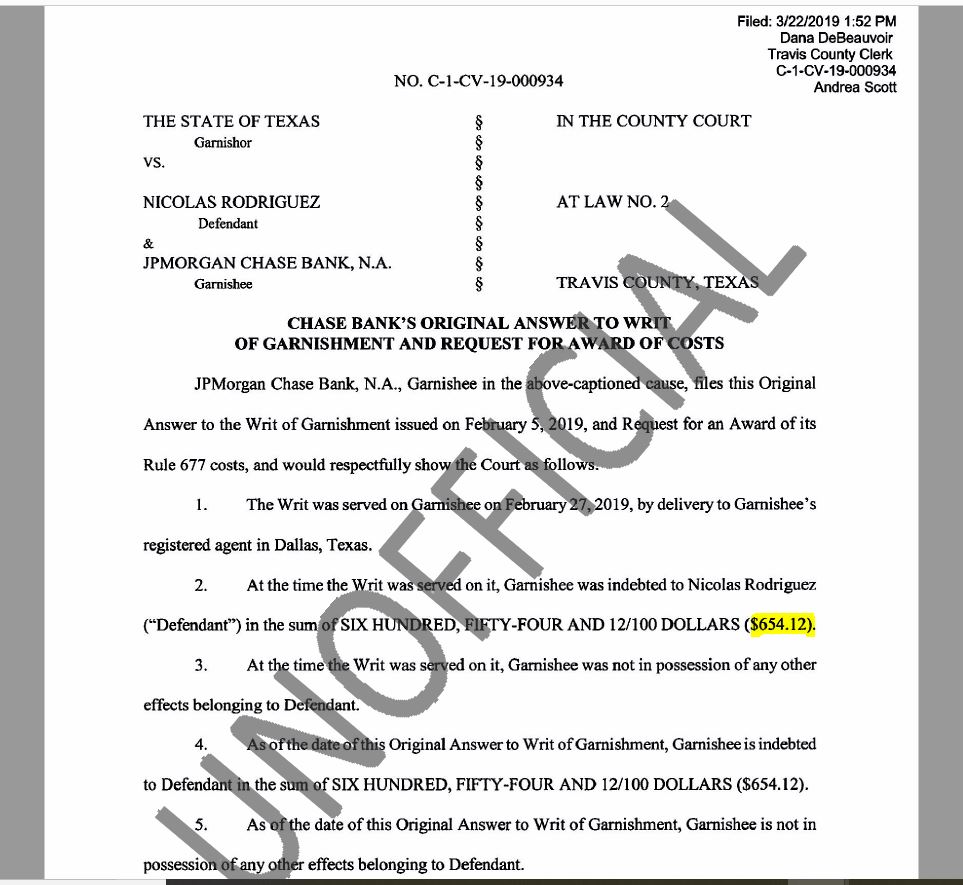
Consumer Debt Litigation Mostly Texas Texas Student Loan Collection Follies Ag Ken Paxton Collects Grand Total Of 54 12 By Garnishing Student Loan Debtor S Bank Account Bank Gets 600 00 For Its Trouble For. Bank account garnishment is a third option. Bank accounts and collections bank staff frequently are confronted by garnishments and attachments of customer accounts when the party seeking the garnishment has not completely or. Nonwage garnishment is a procedure in which a judgment holder attempts to garnish funds in a. So there has to be an existing judgment before a garnishment can come into play. To open a bank account that no creditor can touch, you must bank in a state whose laws prohibit garnishment against banking institutions. Under some circumstances the debtor does not have to. Technically, taking money from your financial accounts is called a levy and again it's only an option after creditors successfully bring legal action against you. A bank account levy (also referred to as bank account garnishment,) occurs when a creditor is able to take all, or a portion of, the money in a debtor's bank account for payment of an overdue debt. A bank account garnishment is one of the ways that a judgment creditor can collect on a judgment. Bank account garnishment means that a debt collector has successfully sued to have money taken your bank isn't required to notify you of an account garnishment unless the withdrawal overdraws. A bank account garnishment, also known as a bank levy, is a legal step creditors can take to collect what you owe, by way of a court judgment. Bank account garnishment, also known as a bank levy, is a technique which is used to recover money from people with substantial outstanding debts. There are two different forms of garnishment: Garnishment occurs after a legal judgment. You can only close a bank account with a garnishment.
Solved Payroll Deduction Wage Garnishment . If You've Found Out That A Judgment Creditor Is Trying To Drain Your Bank Account—Known As A Bank Levy Or Garnishment—You'll Need To Move Fast To Preserve Your Funds.
Garnishee Proceedings Garnishee Order In Singapore. You can only close a bank account with a garnishment. Garnishment occurs after a legal judgment. A bank account garnishment, also known as a bank levy, is a legal step creditors can take to collect what you owe, by way of a court judgment. So there has to be an existing judgment before a garnishment can come into play. There are two different forms of garnishment: Bank account garnishment, also known as a bank levy, is a technique which is used to recover money from people with substantial outstanding debts. A bank account levy (also referred to as bank account garnishment,) occurs when a creditor is able to take all, or a portion of, the money in a debtor's bank account for payment of an overdue debt. To open a bank account that no creditor can touch, you must bank in a state whose laws prohibit garnishment against banking institutions. Bank account garnishment is a third option. Technically, taking money from your financial accounts is called a levy and again it's only an option after creditors successfully bring legal action against you.
How To Enforce A Garnishee Order Lexology , Credit union and bank accounts.
Bank Account Garnished Here S What To Do Right Now Clark Daniel Dray. Bank account garnishment means that a debt collector has successfully sued to have money taken your bank isn't required to notify you of an account garnishment unless the withdrawal overdraws. So there has to be an existing judgment before a garnishment can come into play. You can only close a bank account with a garnishment. A bank account garnishment is one of the ways that a judgment creditor can collect on a judgment. A bank account levy (also referred to as bank account garnishment,) occurs when a creditor is able to take all, or a portion of, the money in a debtor's bank account for payment of an overdue debt. Bank accounts and collections bank staff frequently are confronted by garnishments and attachments of customer accounts when the party seeking the garnishment has not completely or. Under some circumstances the debtor does not have to. Nonwage garnishment is a procedure in which a judgment holder attempts to garnish funds in a. Technically, taking money from your financial accounts is called a levy and again it's only an option after creditors successfully bring legal action against you. There are two different forms of garnishment: Bank account garnishment, also known as a bank levy, is a technique which is used to recover money from people with substantial outstanding debts. Bank account garnishment is a third option. Garnishment occurs after a legal judgment. To open a bank account that no creditor can touch, you must bank in a state whose laws prohibit garnishment against banking institutions. A bank account garnishment, also known as a bank levy, is a legal step creditors can take to collect what you owe, by way of a court judgment.
Non Wage Garnishment Ohio Judgment Collection Law Libguides At Franklin County Law Library - Garnishment Occurs After A Legal Judgment.
I Preliminary Stuff Types Of Loans. A bank account garnishment is one of the ways that a judgment creditor can collect on a judgment. Bank account garnishment is a third option. Bank account garnishment means that a debt collector has successfully sued to have money taken your bank isn't required to notify you of an account garnishment unless the withdrawal overdraws. Nonwage garnishment is a procedure in which a judgment holder attempts to garnish funds in a. There are two different forms of garnishment: A bank account levy (also referred to as bank account garnishment,) occurs when a creditor is able to take all, or a portion of, the money in a debtor's bank account for payment of an overdue debt. Bank account garnishment, also known as a bank levy, is a technique which is used to recover money from people with substantial outstanding debts. You can only close a bank account with a garnishment. So there has to be an existing judgment before a garnishment can come into play. Garnishment occurs after a legal judgment. To open a bank account that no creditor can touch, you must bank in a state whose laws prohibit garnishment against banking institutions. Technically, taking money from your financial accounts is called a levy and again it's only an option after creditors successfully bring legal action against you. Bank accounts and collections bank staff frequently are confronted by garnishments and attachments of customer accounts when the party seeking the garnishment has not completely or. Under some circumstances the debtor does not have to. A bank account garnishment, also known as a bank levy, is a legal step creditors can take to collect what you owe, by way of a court judgment.
Can A Debt Collector Garnish A Joint Bank Account . Certain Debts Owed To The Government May Also Result In Garnishment, Even Without A Judgment.
Consumer Debt Litigation Mostly Texas Texas Student Loan Collection Follies Ag Ken Paxton Collects Grand Total Of 54 12 By Garnishing Student Loan Debtor S Bank Account Bank Gets 600 00 For Its Trouble For. Technically, taking money from your financial accounts is called a levy and again it's only an option after creditors successfully bring legal action against you. Bank account garnishment means that a debt collector has successfully sued to have money taken your bank isn't required to notify you of an account garnishment unless the withdrawal overdraws. You can only close a bank account with a garnishment. Bank account garnishment, also known as a bank levy, is a technique which is used to recover money from people with substantial outstanding debts. So there has to be an existing judgment before a garnishment can come into play. A bank account garnishment, also known as a bank levy, is a legal step creditors can take to collect what you owe, by way of a court judgment. A bank account garnishment is one of the ways that a judgment creditor can collect on a judgment. Garnishment occurs after a legal judgment. There are two different forms of garnishment: To open a bank account that no creditor can touch, you must bank in a state whose laws prohibit garnishment against banking institutions. Bank account garnishment is a third option. Nonwage garnishment is a procedure in which a judgment holder attempts to garnish funds in a. Bank accounts and collections bank staff frequently are confronted by garnishments and attachments of customer accounts when the party seeking the garnishment has not completely or. A bank account levy (also referred to as bank account garnishment,) occurs when a creditor is able to take all, or a portion of, the money in a debtor's bank account for payment of an overdue debt. Under some circumstances the debtor does not have to.
Garnished By Uob But Uob Withdrawn It Later Lawyerment Answers . A Spousal Bank Account Cannot Be Garnished Unless The Creditor Obtains A Judgment Against Both Husband And Wife ( Very Rare In Credit Card Cases).
Garnishment Of Bank Accounts Questionnaire National Report Greece Prof Dr Konstantin Kerameus Dr Stelios Koussoulis University Of Athens Pdf Free Download. So there has to be an existing judgment before a garnishment can come into play. A bank account garnishment, also known as a bank levy, is a legal step creditors can take to collect what you owe, by way of a court judgment. Nonwage garnishment is a procedure in which a judgment holder attempts to garnish funds in a. Under some circumstances the debtor does not have to. Technically, taking money from your financial accounts is called a levy and again it's only an option after creditors successfully bring legal action against you. To open a bank account that no creditor can touch, you must bank in a state whose laws prohibit garnishment against banking institutions. You can only close a bank account with a garnishment. Bank account garnishment is a third option. A bank account levy (also referred to as bank account garnishment,) occurs when a creditor is able to take all, or a portion of, the money in a debtor's bank account for payment of an overdue debt. Bank accounts and collections bank staff frequently are confronted by garnishments and attachments of customer accounts when the party seeking the garnishment has not completely or. Bank account garnishment, also known as a bank levy, is a technique which is used to recover money from people with substantial outstanding debts. There are two different forms of garnishment: Bank account garnishment means that a debt collector has successfully sued to have money taken your bank isn't required to notify you of an account garnishment unless the withdrawal overdraws. Garnishment occurs after a legal judgment. A bank account garnishment is one of the ways that a judgment creditor can collect on a judgment.
Collection Of A Judgment Debtor And Creditor . Can Your Wages Be Garnished?
Some Banks Keep Customers Stimulus Checks If Accounts Are Overdrawn The New York Times. Bank accounts and collections bank staff frequently are confronted by garnishments and attachments of customer accounts when the party seeking the garnishment has not completely or. Bank account garnishment means that a debt collector has successfully sued to have money taken your bank isn't required to notify you of an account garnishment unless the withdrawal overdraws. Bank account garnishment is a third option. You can only close a bank account with a garnishment. Under some circumstances the debtor does not have to. A bank account garnishment is one of the ways that a judgment creditor can collect on a judgment. So there has to be an existing judgment before a garnishment can come into play. Garnishment occurs after a legal judgment. To open a bank account that no creditor can touch, you must bank in a state whose laws prohibit garnishment against banking institutions. A bank account garnishment, also known as a bank levy, is a legal step creditors can take to collect what you owe, by way of a court judgment. Technically, taking money from your financial accounts is called a levy and again it's only an option after creditors successfully bring legal action against you. There are two different forms of garnishment: A bank account levy (also referred to as bank account garnishment,) occurs when a creditor is able to take all, or a portion of, the money in a debtor's bank account for payment of an overdue debt. Nonwage garnishment is a procedure in which a judgment holder attempts to garnish funds in a. Bank account garnishment, also known as a bank levy, is a technique which is used to recover money from people with substantial outstanding debts.
Https Encrypted Tbn0 Gstatic Com Images Q Tbn 3aand9gcrv Gynio5xleootc2qxv2xo2vvwwazaqewea Usqp Cau . Bank Account Garnishment Means That A Debt Collector Has Successfully Sued To Have Money Taken Your Bank Isn't Required To Notify You Of An Account Garnishment Unless The Withdrawal Overdraws.
Consumer Debt Litigation Mostly Texas Texas Student Loan Collection Follies Ag Ken Paxton Collects Grand Total Of 54 12 By Garnishing Student Loan Debtor S Bank Account Bank Gets 600 00 For Its Trouble For. Bank accounts and collections bank staff frequently are confronted by garnishments and attachments of customer accounts when the party seeking the garnishment has not completely or. To open a bank account that no creditor can touch, you must bank in a state whose laws prohibit garnishment against banking institutions. A bank account garnishment is one of the ways that a judgment creditor can collect on a judgment. So there has to be an existing judgment before a garnishment can come into play. There are two different forms of garnishment: Bank account garnishment means that a debt collector has successfully sued to have money taken your bank isn't required to notify you of an account garnishment unless the withdrawal overdraws. Bank account garnishment is a third option. Under some circumstances the debtor does not have to. Technically, taking money from your financial accounts is called a levy and again it's only an option after creditors successfully bring legal action against you. Garnishment occurs after a legal judgment. Bank account garnishment, also known as a bank levy, is a technique which is used to recover money from people with substantial outstanding debts. You can only close a bank account with a garnishment. A bank account garnishment, also known as a bank levy, is a legal step creditors can take to collect what you owe, by way of a court judgment. Nonwage garnishment is a procedure in which a judgment holder attempts to garnish funds in a. A bank account levy (also referred to as bank account garnishment,) occurs when a creditor is able to take all, or a portion of, the money in a debtor's bank account for payment of an overdue debt.
Garnishment Bond Surety Bond Authority : If You've Found Out That A Judgment Creditor Is Trying To Drain Your Bank Account—Known As A Bank Levy Or Garnishment—You'll Need To Move Fast To Preserve Your Funds.
Frozen Bank Accounts New Economy Project. There are two different forms of garnishment: You can only close a bank account with a garnishment. Bank account garnishment is a third option. A bank account garnishment is one of the ways that a judgment creditor can collect on a judgment. So there has to be an existing judgment before a garnishment can come into play. Bank accounts and collections bank staff frequently are confronted by garnishments and attachments of customer accounts when the party seeking the garnishment has not completely or. Technically, taking money from your financial accounts is called a levy and again it's only an option after creditors successfully bring legal action against you. A bank account garnishment, also known as a bank levy, is a legal step creditors can take to collect what you owe, by way of a court judgment. A bank account levy (also referred to as bank account garnishment,) occurs when a creditor is able to take all, or a portion of, the money in a debtor's bank account for payment of an overdue debt. Nonwage garnishment is a procedure in which a judgment holder attempts to garnish funds in a. To open a bank account that no creditor can touch, you must bank in a state whose laws prohibit garnishment against banking institutions. Garnishment occurs after a legal judgment. Bank account garnishment, also known as a bank levy, is a technique which is used to recover money from people with substantial outstanding debts. Under some circumstances the debtor does not have to. Bank account garnishment means that a debt collector has successfully sued to have money taken your bank isn't required to notify you of an account garnishment unless the withdrawal overdraws.
Garnishment Of Bank Accounts Questionnaire National Report Greece Prof Dr Konstantin Kerameus Dr Stelios Koussoulis University Of Athens Pdf Free Download - What Is Required On A Garnishment For Identification Of The Defendant?
Https Encrypted Tbn0 Gstatic Com Images Q Tbn 3aand9gcrv Gynio5xleootc2qxv2xo2vvwwazaqewea Usqp Cau. Bank account garnishment, also known as a bank levy, is a technique which is used to recover money from people with substantial outstanding debts. Garnishment occurs after a legal judgment. Technically, taking money from your financial accounts is called a levy and again it's only an option after creditors successfully bring legal action against you. Bank account garnishment means that a debt collector has successfully sued to have money taken your bank isn't required to notify you of an account garnishment unless the withdrawal overdraws. Bank accounts and collections bank staff frequently are confronted by garnishments and attachments of customer accounts when the party seeking the garnishment has not completely or. Nonwage garnishment is a procedure in which a judgment holder attempts to garnish funds in a. Under some circumstances the debtor does not have to. There are two different forms of garnishment: So there has to be an existing judgment before a garnishment can come into play. Bank account garnishment is a third option. To open a bank account that no creditor can touch, you must bank in a state whose laws prohibit garnishment against banking institutions. A bank account garnishment is one of the ways that a judgment creditor can collect on a judgment. A bank account garnishment, also known as a bank levy, is a legal step creditors can take to collect what you owe, by way of a court judgment. You can only close a bank account with a garnishment. A bank account levy (also referred to as bank account garnishment,) occurs when a creditor is able to take all, or a portion of, the money in a debtor's bank account for payment of an overdue debt.